Does U.S. Military Intervention in Venezuela Provide Model for China's Invasion of Taiwan?
United Daily News Commentary, January 4, 2026
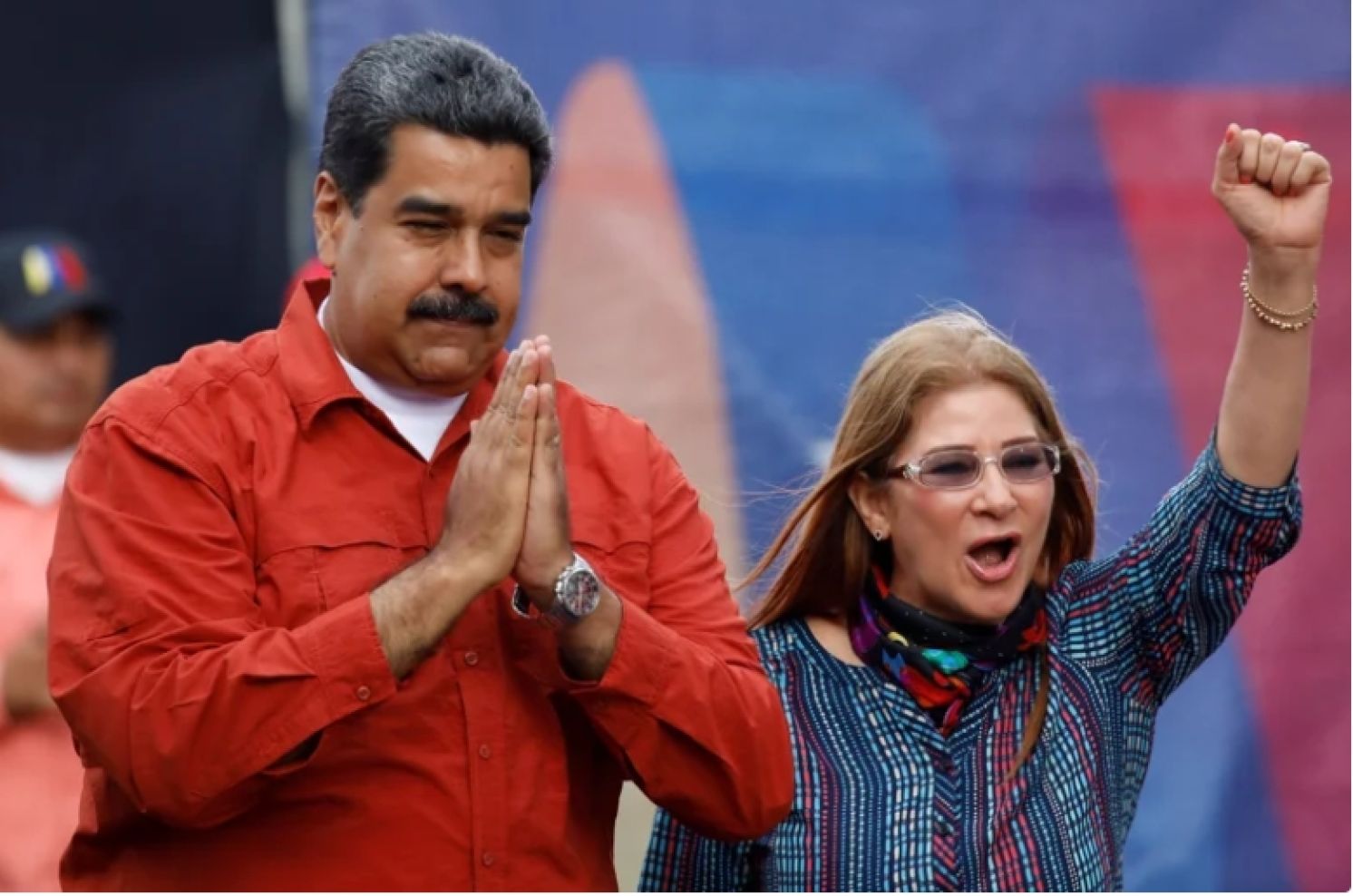
The United States sending troops directly into Venezuelan territory to seize that country’s president and his wife has shocked governments around the world, and the impact on cross-strait dynamics is no less profound. Some commentators have even claimed that the U.S. military has provided the PLA with a precedent to follow. In reality, what the administration of President Lai Ching-te should be concerned about is whether the proposed amendments to the “Act Governing Relations Between the People of the Taiwan Area and Mainland Area” by DPP legislators could become the next “invitation.”
After three months of military reconnaissance, blockade, and exercises targeting Venezuela, the U.S. military ultimately, with internal coordination, successfully captured President Nicolás Maduro and his wife from their bedroom and brought them back to the United States, then withdrew all forces safely. This flawless surprise operation can be described as a textbook-level model.
President Donald Trump of the United States also took the opportunity to warn the authorities in Cuba and Colombia not to become the next Maduro. Although this U.S. military action—violating international law—has drawn opposition and condemnation from many countries, none have the capacity to respond. Some even worry that it has given other major powers, such as Russia or mainland China, an excuse to enter another country’s territory to arrest its head of state—an excuse that, like the American approach, can be fabricated at will, such as claiming a crackdown on drug trafficking.
It is often said that military action requires justification. At the very least, the United States pinned drug trafficking charges on Maduro; the DPP must not hand the Communist China a basis to initiate “punishment of Taiwan independence.”
At present, there is an unexploded bomb waiting to be defused. DPP Legislator Lin I-chin and more than 20 fellow DPP legislators have proposed amending the Act Governing Relations between the People of the Taiwan Area and the Mainland Area by renaming it the “Act Governing Relations between the People of Taiwan and the People’s Republic of China,” and deleting phrases such as “prior to national unification.” If passed, then Taiwan and the mainland would no longer be in a cross-strait relationship, but rather a de facto “state-to-state” legal relationship—commonly referred to as de jure Taiwan independence.
A review of the mainland China’s Anti-Secession Law shows that once Taiwan independence is pursued, it would trigger the mainland to adopt “non-peaceful means and other necessary measures” to “safeguard national sovereignty and territorial integrity.” There are many forms of non-peaceful means; the fastest and lowest-cost option is likely a decapitation operation, which would rank first. At this moment, the U.S. military has conveniently provided the PLA with a perfect demonstration.
This maneuver by DPP legislators may be a feint, testing the reactions of the opposition. But if it were to become real, and the oppositions were to go along with it, would this not amount to an “invitation” for armed intervention? How the Lai administration and the DPP caucus handle this bill—whether to withdraw it or not—is being closely watched.
From the People’s Liberation Army’s (PLA) “Justice Mission–2025” encirclement drills around Taiwan last week, to the Jilin-1 satellite’s ability to precisely locate the residence and office of legislator Shen Po-yang, Taiwan cannot rule out that the PLA may already possess decapitation capabilities.
The Republic of China Armed Forces has stated that PLA aircraft and vessels did not enter within 24 nautical miles, and that videos showing Taipei 101 were part of cognitive warfare. In reality, the key point is no longer whether that footage was fabricated. That brief moment should be understood as the PLA signaling a rehearsal of a digitalized decapitation operation.
Using the TB001 “Twin-Tailed Scorpion” drone with low-altitude penetration tactics, synthetic aperture radar, and electro-optical pods, the PLA conducted 360-degree, blind-spot-free imaging of the entire core area and memorized all streets. This drone is also known as a “bomb truck,” featuring large payload capacity and long range. In future operations, it may also escort smaller loitering munitions such as the Sunflower-200, or civilian-modified micro-drones.
On the mainland, this is described as “large quantity, guaranteed supply.” A Twin-Tailed Scorpion costs only a few million yuan, while a Sunflower loitering munition costs only tens of thousands of yuan. When hundreds or thousands of these aerial platforms swarm in, Taiwan’s air defense becomes a “cost game.” Once Taiwan’s radar systems detect them, should a four-million-dollar Patriot missile be fired or not? In such “asymmetric warfare,” whether Taiwan can sustain the cost is an open question.
For Taiwan, how to avoid giving Communist China any excuse or opportunity to carry out a decapitation operation is a lesson that should be drawn from Venezuela’s painful experience. Whether Taiwan can truly learn from it, however, remains to be seen.